Welcome to the Mathematical World!
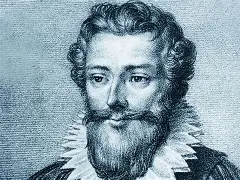
François Viète (1540 – 1603)
Father of Modern Algebra and Pioneer of Symbolic Notation
François Viète transformed algebra by introducing the systematic use of letters to represent unknowns and constants. This symbolic approach allowed equations to be generalized and manipulated efficiently, paving the way for modern algebra and symbolic computation. For example, he would write an equation as: \[ A \cdot x^2 + B \cdot x + C = 0, \] where \(A, B, C\) are known constants and \(x\) is the unknown, enabling operations that applied universally rather than to specific numbers.
Viète applied his methods to solve complex problems, including astronomical calculations and cryptographic ciphers for the French crown. His work demonstrated that abstract reasoning combined with structured notation could simplify otherwise intractable problems and uncover solutions systematically.
Beyond practical applications, Viète’s symbolic algebra provided a foundation for mathematicians such as René Descartes and Pierre de Fermat. By linking arithmetic, geometry, and symbolic representation, he helped establish algebra as a powerful tool for modeling, reasoning, and problem-solving across disciplines.
Viète’s work bridged the gap between Renaissance arithmetic and modern mathematical thought, introducing the clarity and structure that define contemporary algebraic methods. His innovations allowed mathematicians to generalize formulas, manipulate equations, and approach mathematics with a new formal rigor.
Facts:
- Born in Fontenay-le-Comte, France.
- Introduced letters consistently for variables and constants, standardizing symbolic algebra.
- Worked on cryptography, solving ciphers for French royalty.
- Balanced a career as a lawyer alongside his mathematical work.
- Often called the “father of modern algebra” for his pioneering symbolic methods.

All rights reserved by the Mathematical Unity
Contact: +8801400044645
Email: mathematicalhorse1453@gmail.com
Our Discord Server: Mathematical Unity [Ulus Riyadiyat]